

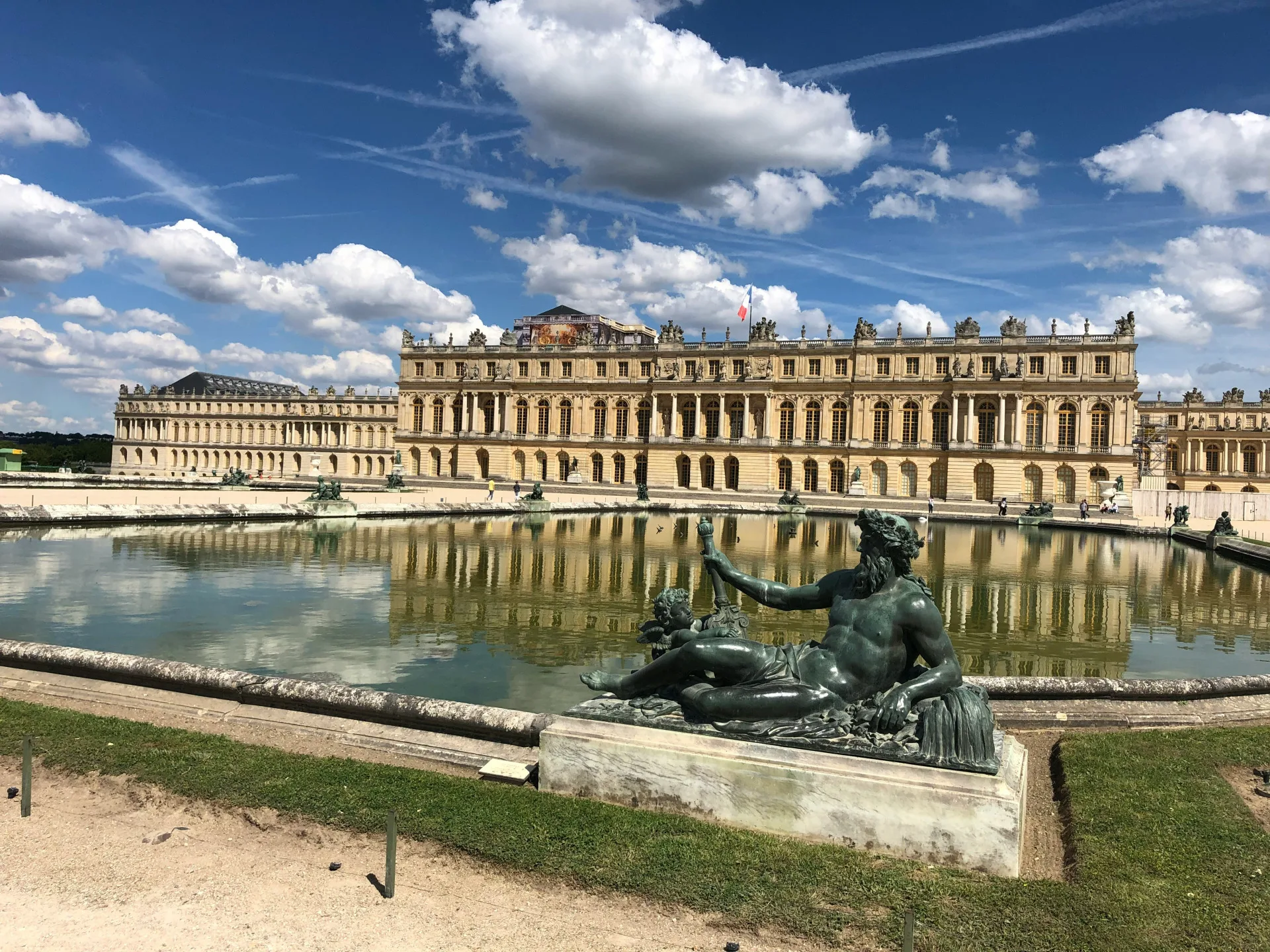
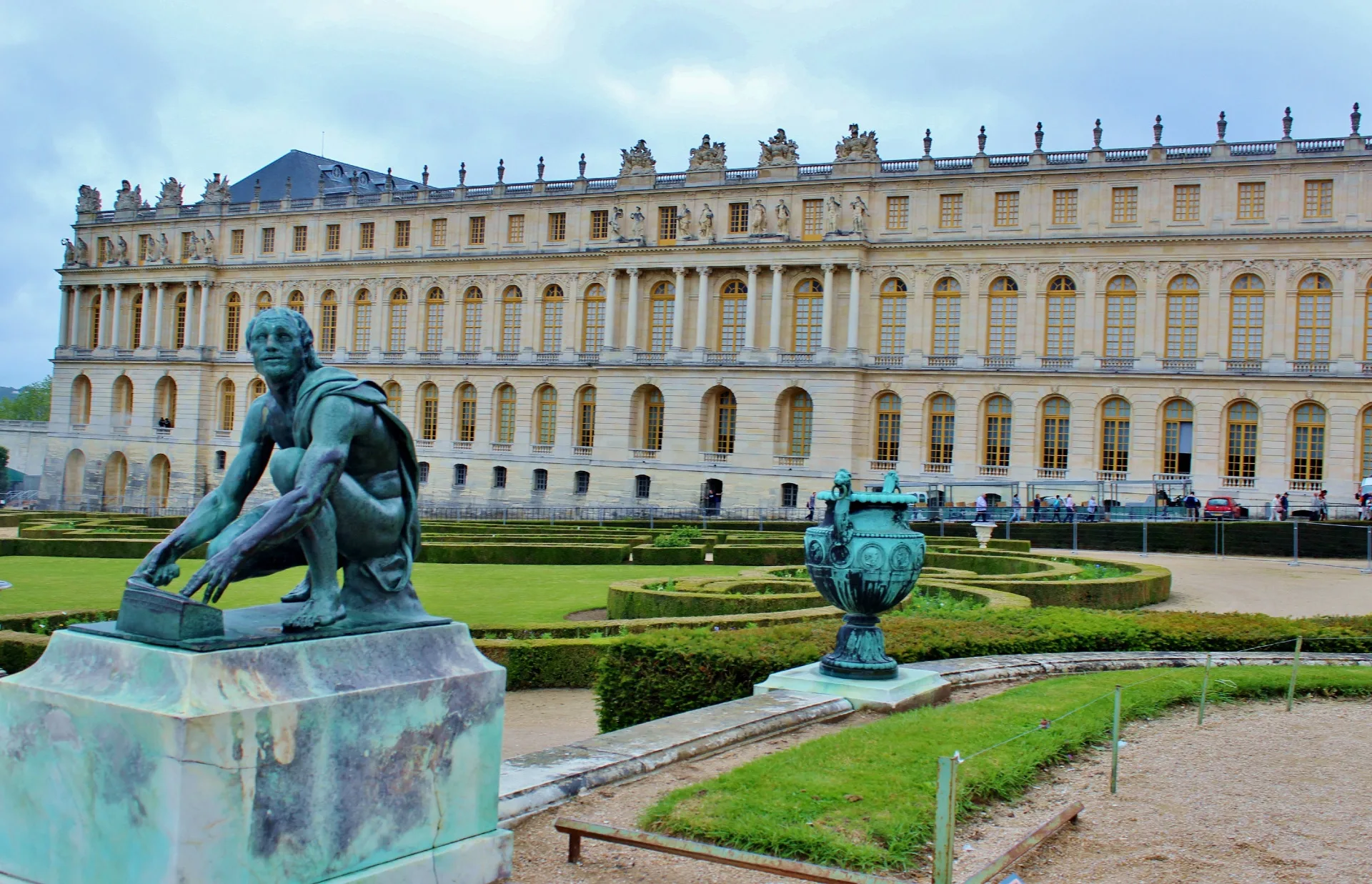
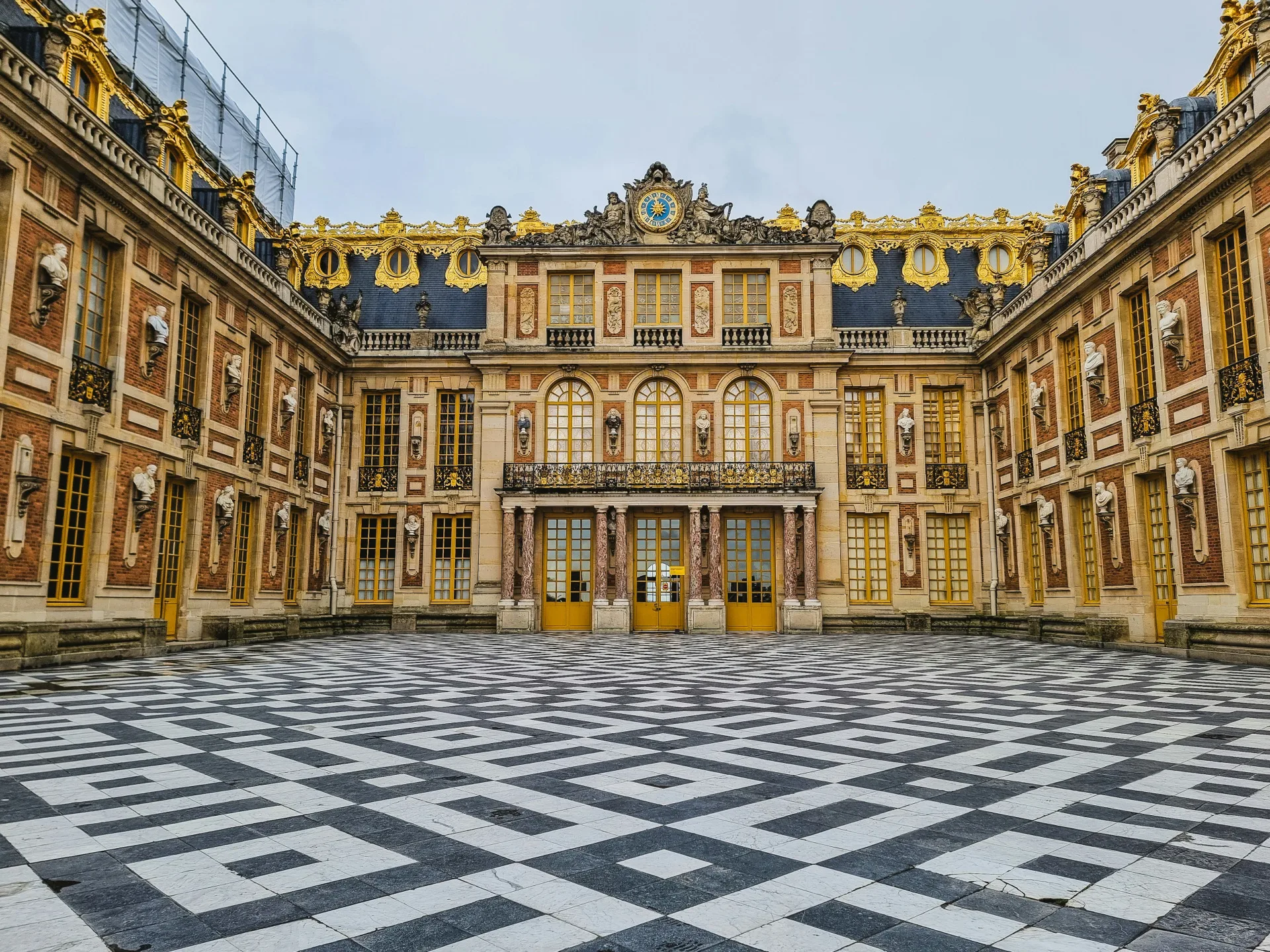
The Palace of Versailles is renowned for its rich history: this magnificent palace and park ensemble once served as the residence of French kings and is now a famous historical museum.
Its exquisite architecture, refined interiors, and magnificent landscapes represent a model of boundless luxury and European sophistication.
The Versailles complex impresses with its grandeur, leaving no visitor indifferent.
Like in a fascinating novel, the history of Versailles has it all:
The construction of this architectural masterpiece began by decree of the Sun King, Louis XIV, and lasted for more than 50 years.
Around 30,000 people were involved in the construction work.
More than 25 million livres were spent on the construction of the Palace of Versailles—an astronomical sum for that time.
Today, the Palace of Versailles is the largest palace complex in Europe and welcomes more than 12 million visitors from all over the world every year.
We will highlight the main stages of the экскурсия, but the route itself remains at the discretion of the guide.
Our acquaintance with Versailles will begin with the Grand Royal Staircase, along which you will proceed to the Salon of Hercules.
In the salon, from which the acquaintance with the state apartments begins, there are two outstanding works of Italian painting — paintings by the Venetian artist Veronese.
The ceiling of the Salon of Hercules was painted over four years (1733–1736) by François Lemoyne. Later Voltaire said: “In Europe there is no larger work of painting than Lemoyne’s ceiling, and I do not know if there is anything more beautiful in the world.”
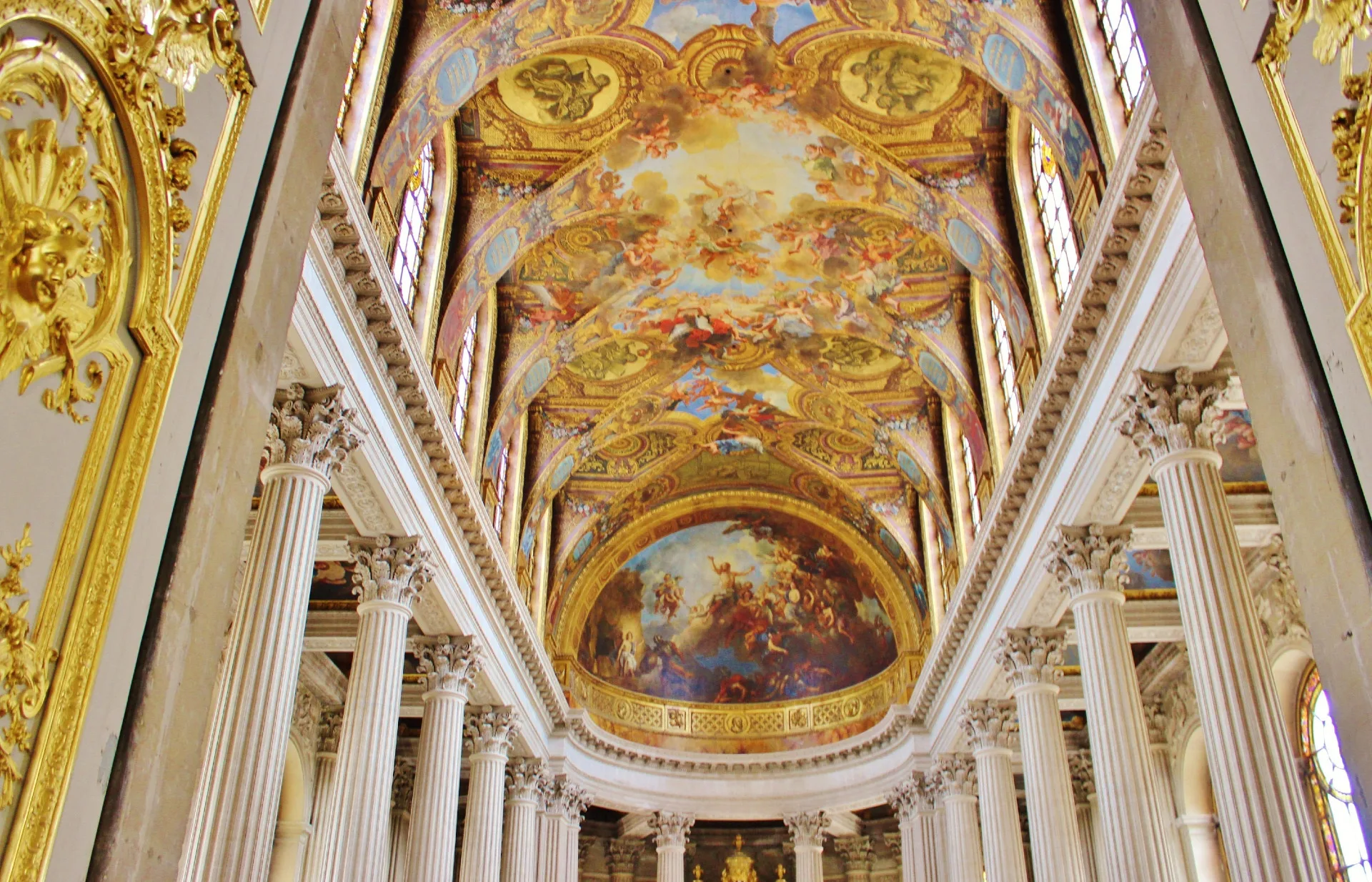
It is one of the most iconic and significant structures of the palace, earning the title of the “pearl” of Versailles.
Louis XIV, known as the Sun King, considered the chapel his final monumental construction project and spiritual legacy. In creating the chapel, he sought to create a space worthy of the grandeur of Versailles and the divine power which, in his opinion, he embodied.
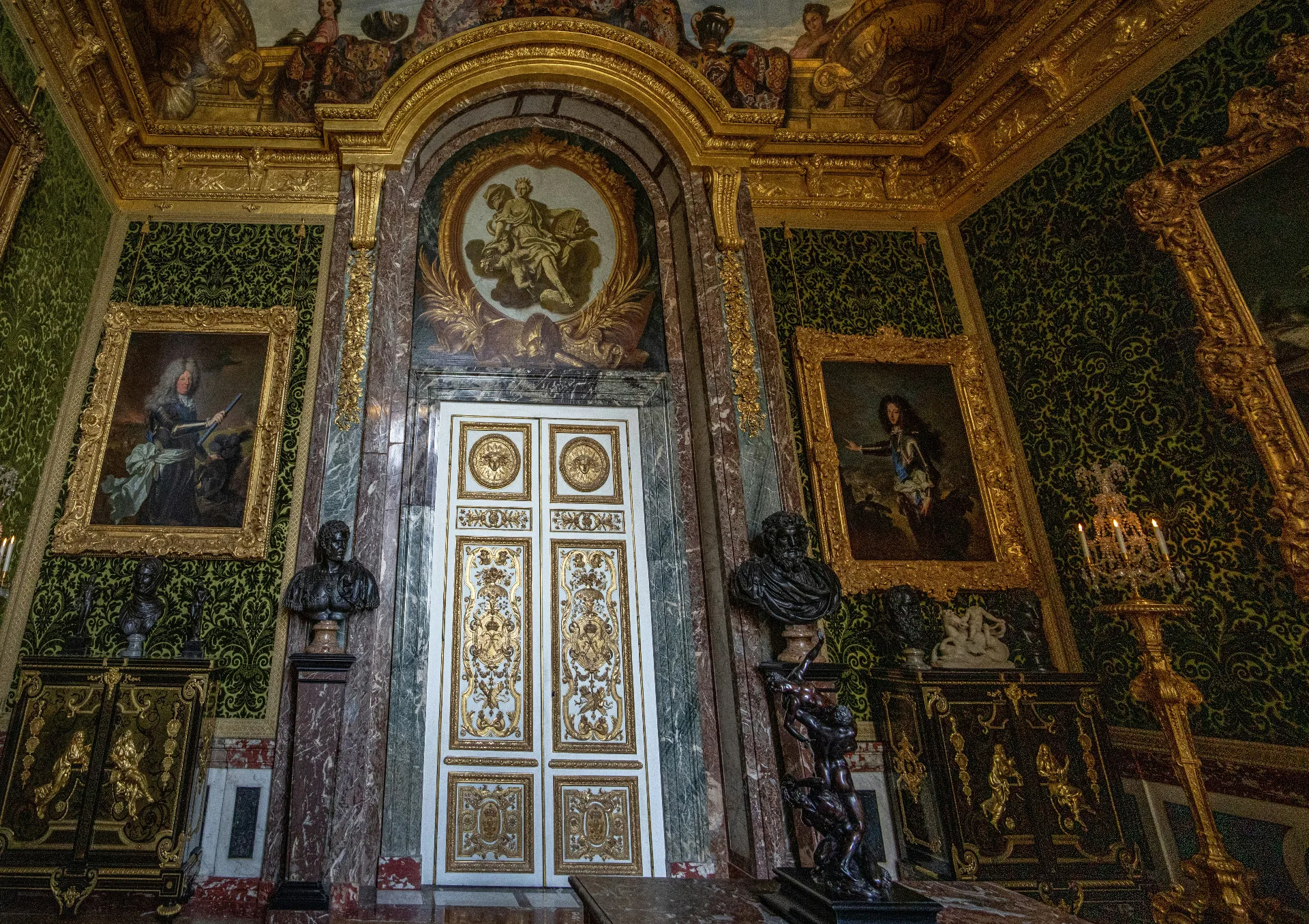
The Salon of Mars is not just a ceremonial room. It is the heart of the military power of Louis XIV, created in the 1680s by architect Jules Hardouin-Mansart and artist Charles Le Brun.
The Sun King wanted to show all of Europe that France was an invincible military machine, and for this he created an entire manifesto room.
The Salon of Mars is one of the king’s favorite halls, where royal balls were held. Here you will see portraits not only of the famous monarch, but also of his great-grandson and his wife.
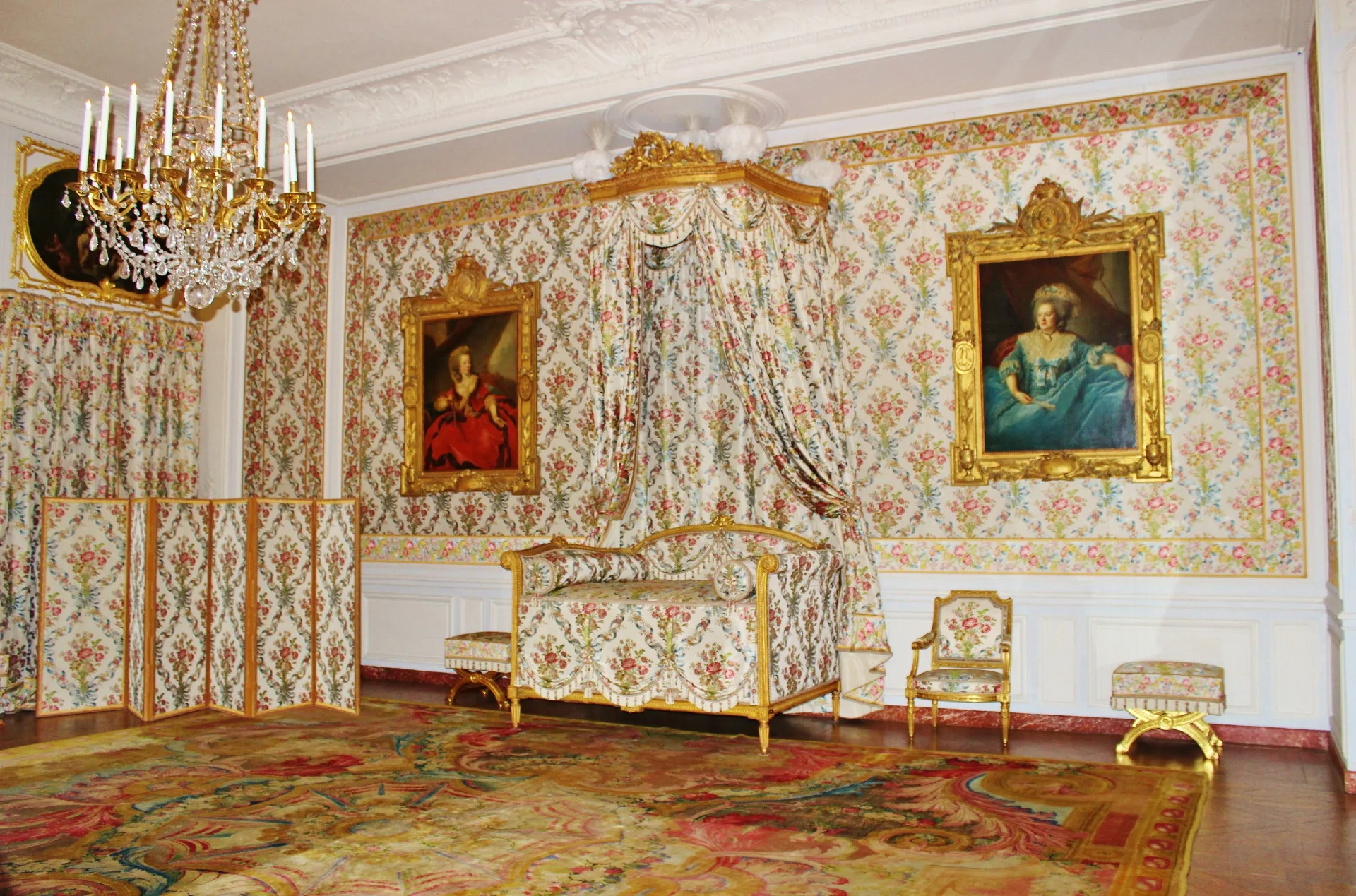
In 1682, when the court and government officially moved to Versailles, the Salon of Mercury served as a ceremonial bedroom with a bed embroidered with gold.
Royal heirs were born here. In the evenings, games were held for members of the royal family. Games were highly valued in Versailles, often played for money, and courtiers frequently wagered large sums.
Once adorned with a royal throne, this hall was meant to impress foreign ambassadors who presented their credentials to the king here.
Here are displayed the final portraits of Louis XIV and Louis XVI.
“A state, to be strong, must wage war,” the king once said.
In 1678, Louis XIV decided to create a hall that would become a hymn to French military power. Architect Jules Hardouin-Mansart, over 8 years (1678–1686), created a space embodying the history of victories.
It was here that declarations of war were signed. This is the first hall decorated with royal mirrors.
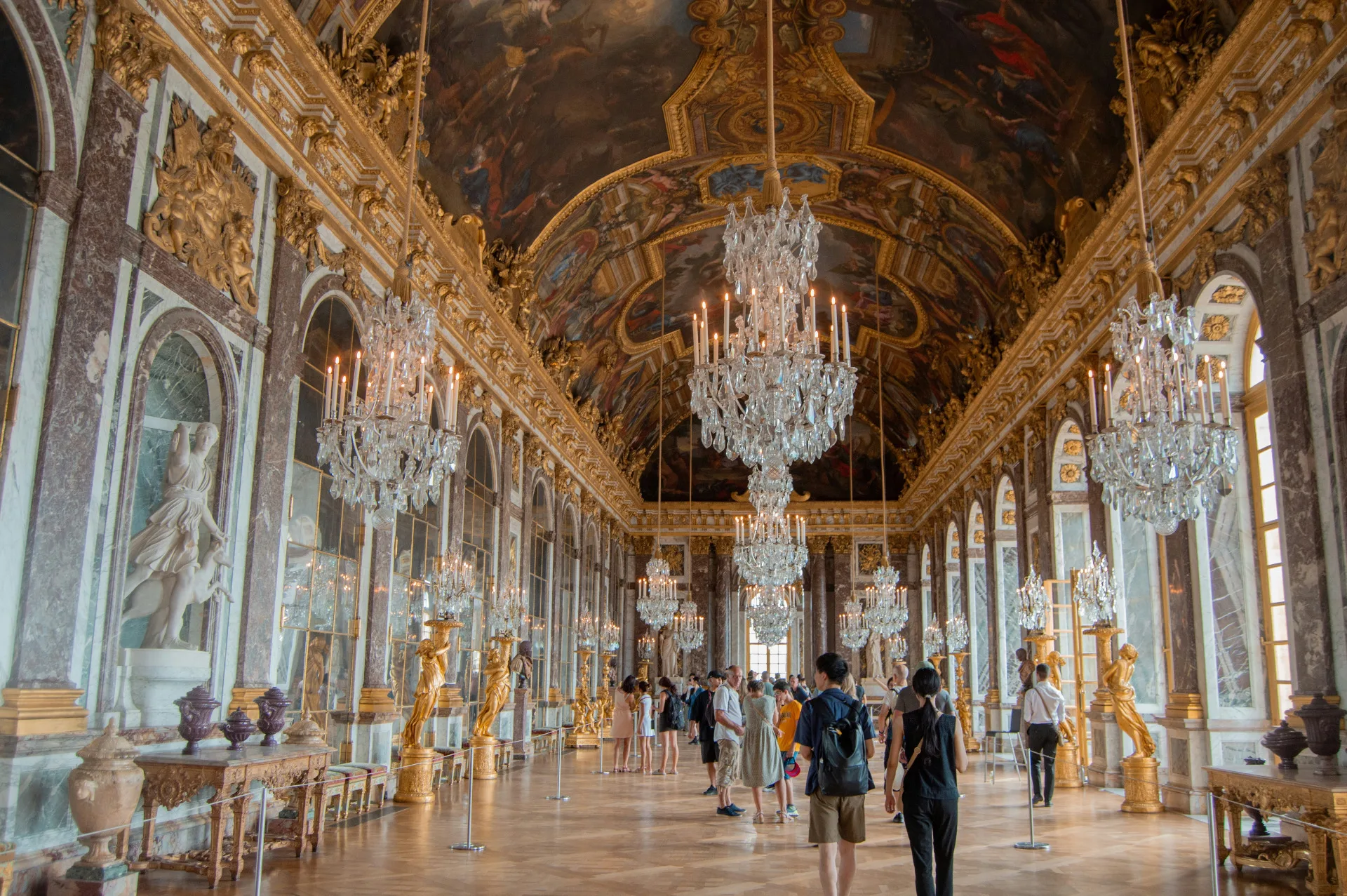
The project closest to the heart of Louis XIV was the grand gallery for official receptions.
The gallery occupies the entire western façade of the palace and is 73 meters long. It separated the king’s and queen’s apartments.
Here you will learn how an architect’s mistake led to the creation of the most beautiful hall in Europe.
Originally, it was divided into two rooms. In the first, the Council of Ministers met, while in the second there were cabinets containing royal wigs, which gave rise to the name “Cabinet of Wigs.”
In 1755, Louis XV ordered the architect Gabriel to unite the rooms. The most important decisions of the reigns of Louis XV and Louis XVI were made here, and personal audiences were also held.
This is not an ordinary bedroom — it is a theater of power. Here, every morning, the ritual of the king’s awakening took place, and every evening decisions were made that determined the fate of Europe.
It was here that the king died on September 1, 1715.
In the wall of this hall there is an opening resembling a bull’s eye, through which one could observe what was happening in the royal apartments.
This was a place for the chosen — only those close to the monarch could be here. A portrait of the royal family is also displayed.
The beginning of the Queen’s apartments, decorated with a portrait of “the most handsome king” — Louis XV.
One of the most elegant rooms of Versailles, reflecting the refined taste of Marie Antoinette.
Created in the 1680s as a ceremonial treasury of royal tableware. Architect Jules Hardouin-Mansart conceived it as a symbol of the art of living beautifully.
The elegance of the fireplaces and wall paintings creates the charm of this hall.
Twelve personal guards were constantly stationed here. In October 1789, during the storming of the palace, the guards became victims of the Revolution.
A 19th-century exhibition created by King Louis-Philippe, dedicated to Napoleon I and the history of France.
A vast hall dedicated to France’s military victories over 15 centuries.
The conclusion of the palace route. A French-style staircase used by queens and later revolutionaries.
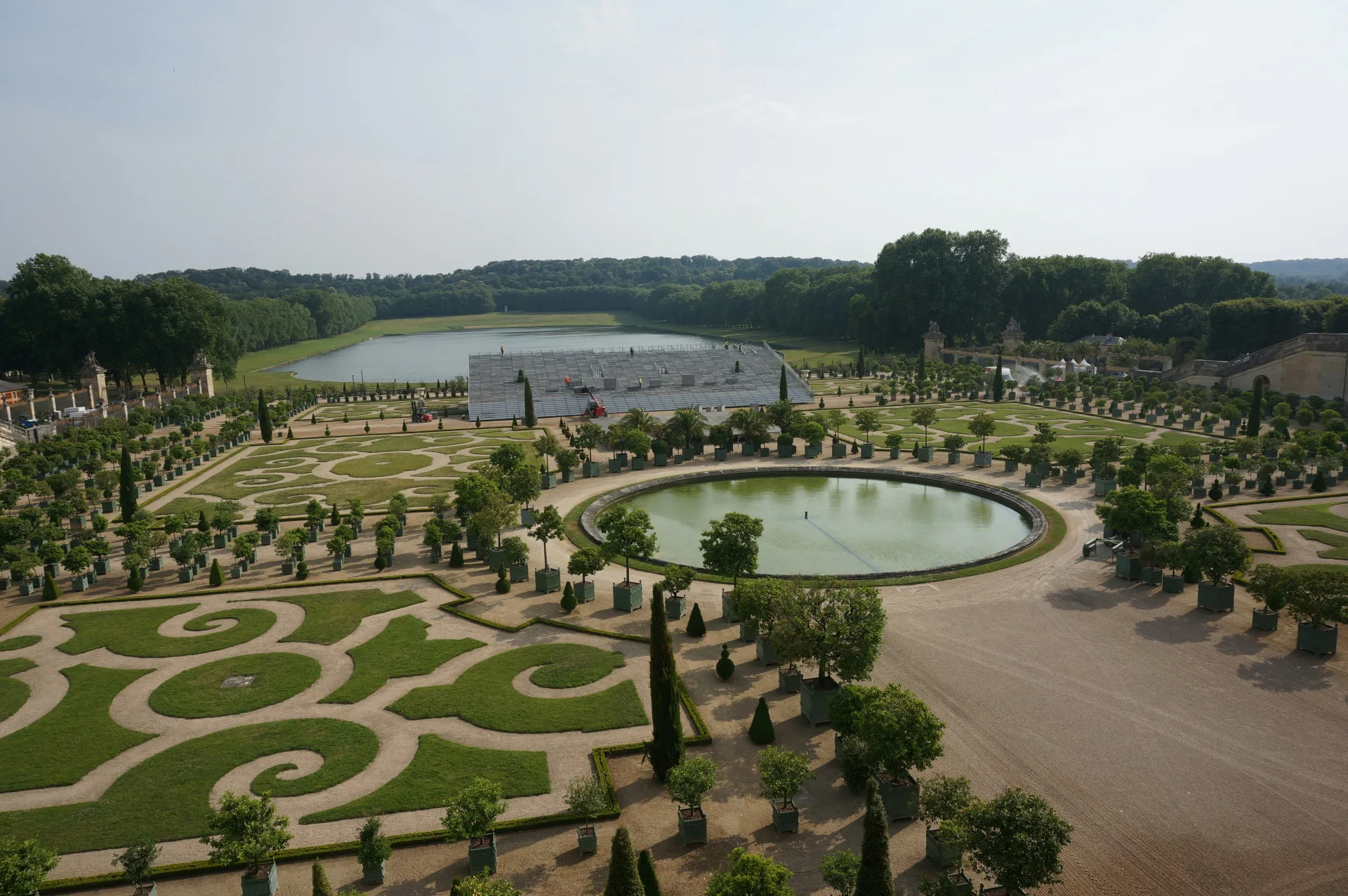
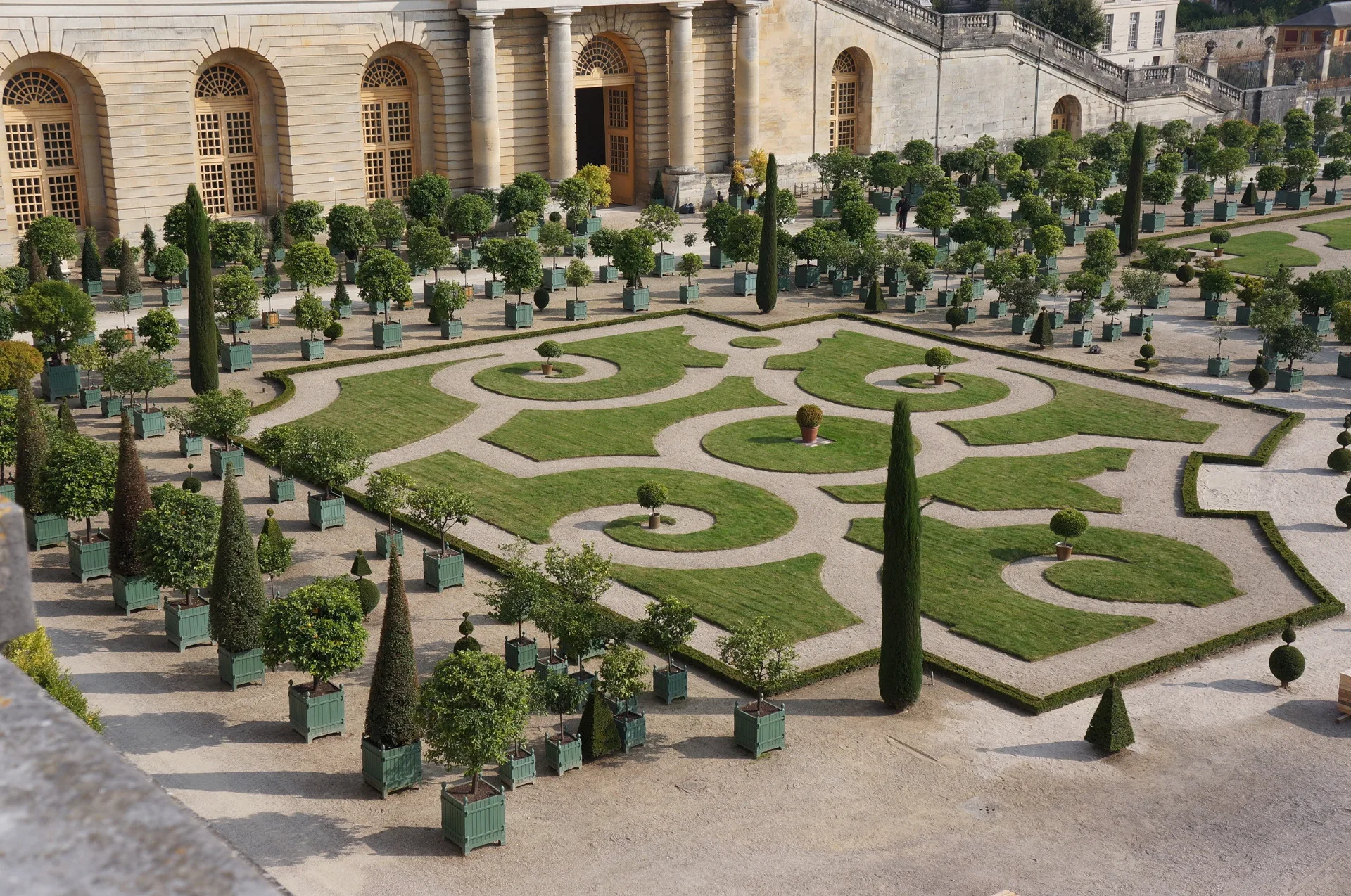
A southern parterre with geometric flower beds, boxwood patterns, sculptures, and vases.
A fountain illustrating the myth of Latona, the transformation of peasants into frogs, symbolizing the events of the Fronde.
Two mirrored basins with sculptures symbolizing the rivers of France create a transition from the palace to the gardens.